
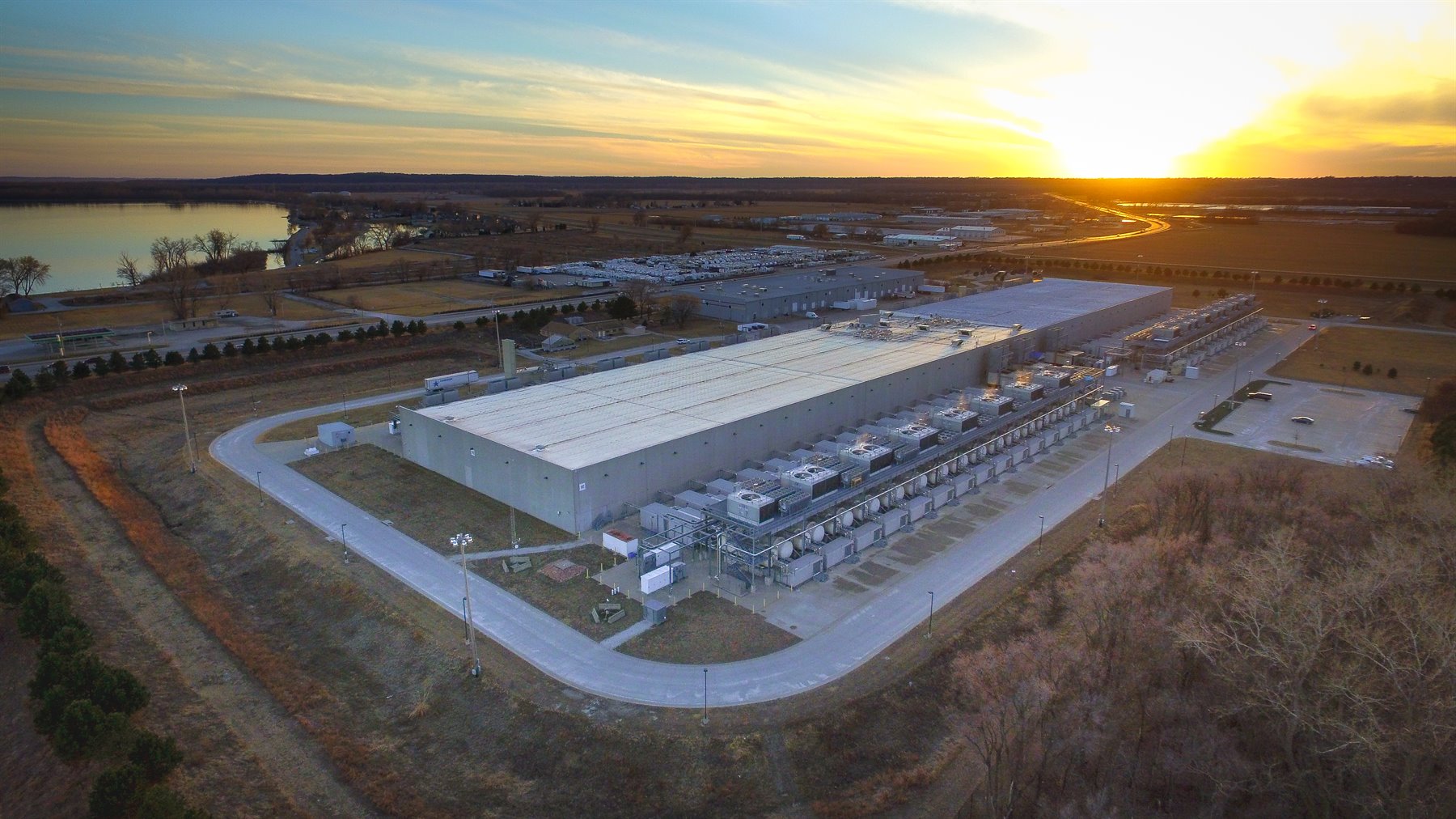
Global scale increasingly depends on the infrastructure choices that make digital platforms secure, resilient, performant and economically viable.
Introduction
Digital infrastructure has become one of the most important strategic layers of the global economy.
Cloud platforms, data centers, fiber networks, edge locations, cybersecurity systems, energy access, software delivery pipelines and data architecture now support nearly every digital business model. In the age of artificial intelligence, this infrastructure is becoming even more central.
For years, founders and investors treated digital infrastructure as something that could be abstracted away. The cloud made capacity appear elastic. APIs made services appear instantly available. Global platforms made distribution feel borderless.
But the next generation of technology companies is revealing a different reality: scale depends on resilient infrastructure.
The question is no longer only whether a company can acquire users. It is whether the company can operate securely, reliably and economically at global scale.
Global scale increasingly depends on the infrastructure choices that make digital platforms secure, resilient, performant and economically viable.
The next generation of global platforms will be judged not only by their software, but by the resilience of the infrastructure beneath it.
1. Infrastructure Is Now Part of the Product
In many software markets, infrastructure was once invisible to the customer. Users cared about features, interface, pricing and outcomes. The servers, networks, storage and security layers behind the product were rarely discussed.
That is changing.
Enterprise customers increasingly ask about uptime, data location, security posture, disaster recovery, latency, auditability, access controls and vendor dependency. AI customers ask about compute availability, data governance, model performance and inference cost. Regulated customers ask about compliance, resilience and operational continuity.
Infrastructure has therefore become part of the product promise.
A platform that cannot perform reliably is not simply facing a technical problem. It is facing a trust problem.
2. Cloud Capacity Is Strategic Capacity
Cloud capacity is not merely an operating expense. It is strategic capacity.
For AI companies, infrastructure choices can influence gross margin, latency, product reliability, data security and customer experience. Compute availability can determine how quickly a product can scale. Storage and data architecture can determine whether insights are reliable. Network design can determine whether users experience the platform as instant or fragile.
This means that infrastructure diligence is becoming part of company diligence.
Investors need to understand how a company’s infrastructure costs evolve with growth, how dependent it is on a single provider, whether it can serve enterprise customers across regions and whether its architecture supports long-term margin expansion.
3. Resilience Is the New Growth Constraint
Growth creates stress.
A product that works for early adopters may fail under enterprise volume. A cloud architecture that works in one region may struggle across jurisdictions. A data pipeline that supports basic analytics may break under AI workloads. A security model that works for small customers may not satisfy institutional buyers.
Resilience is therefore a growth constraint.
The most valuable platforms will be those that can scale without becoming fragile. This requires redundancy, observability, incident response, backup strategy, access control, recovery planning and disciplined engineering operations.
Infrastructure resilience is not a luxury. It is the foundation of global scale.
4. The Energy Layer Is Entering Digital Strategy
AI and cloud growth are making electricity part of the digital infrastructure conversation.
Data centers require power, cooling, land, interconnection, water strategy and regulatory approval. As AI workloads increase density, infrastructure planning must account for energy availability and thermal management.
This creates a new connection between software markets and physical infrastructure.
Founders may not build data centers, but they are still exposed to the economics of compute. Investors may not finance power plants, but they must understand how energy constraints affect cloud costs, availability and strategic risk.
The digital economy is becoming more physically constrained.
5. Security Is Infrastructure
Security is no longer a separate checklist. It is infrastructure.
A global platform must protect identity, data, APIs, user permissions, endpoints, model outputs, customer environments and internal systems. For AI companies, security also includes prompt injection risks, model misuse, data leakage, sensitive retrieval, supply-chain exposure and governance of autonomous agents.
The strongest companies integrate security into the architecture from the beginning.
They do not add security only when a large customer asks for it. They use security as part of their enterprise readiness and investor narrative.
6. Data Architecture Determines Scalability
Data architecture is one of the most underestimated parts of digital infrastructure.
A company can build a beautiful interface and still fail because its data layer is fragmented. It can deploy AI features and still struggle because retrieval is weak, permissions are unclear, data quality is inconsistent or audit trails are incomplete.
Scalable platforms need data systems that support:
- ingestion;
- normalization;
- permissions;
- search;
- analytics;
- model evaluation;
- privacy;
- auditability;
- interoperability;
- and compliance.
In the AI era, data architecture is not a back-office concern. It is a strategic asset.
7. Global Scale Requires Regional Intelligence
Global infrastructure is not one-size-fits-all.
Different markets create different requirements around latency, data residency, privacy, cloud provider preference, payment systems, language, regulatory expectations and customer support. A platform that expands internationally must understand these differences without fragmenting its core architecture.
This is where regional intelligence matters.
A company does not need to build separate systems for every market, but it needs enough flexibility to serve different environments without creating operational chaos.
8. What Investors Should Ask
Digital infrastructure diligence should include questions such as:
- How does infrastructure cost scale with usage?
- What are the largest points of failure?
- Does the company depend on one provider, region or model vendor?
- What is the disaster recovery plan?
- How is sensitive data protected?
- Can the architecture support enterprise compliance?
- What latency constraints matter to the product?
- How does the company monitor incidents?
- What infrastructure investments will be needed after the next round?
- Does the architecture create defensibility or only cost?
These questions help investors identify whether a company is prepared for global scale or only early traction.
9. The Valarty View
At Valarty, digital infrastructure is viewed as a strategic investment layer connecting software, AI, cybersecurity, data centers, cloud capacity and global platform scale.
The next generation of venture-scale companies will need more than product-market fit. They will need infrastructure-market fit: the ability to serve customers reliably, securely and economically as demand expands across regions and industries.
This is especially true for AI companies, enterprise platforms, regulated software, robotics systems, digital finance, legal technology and infrastructure-heavy applications.
Infrastructure is no longer behind the business. It is part of the business.
Conclusion
Digital infrastructure is becoming central to the future of global scale.
As AI, cloud and software platforms expand, the companies that win will be those that design for resilience, security, data quality, energy realism and regional adaptability.
Scale is not only a growth outcome.
It is an infrastructure capability.
Research Notes
Content published by VALARTY is for strategic, informational and institutional purposes only. It does not constitute investment advice, an offer to sell securities or a solicitation to invest.