
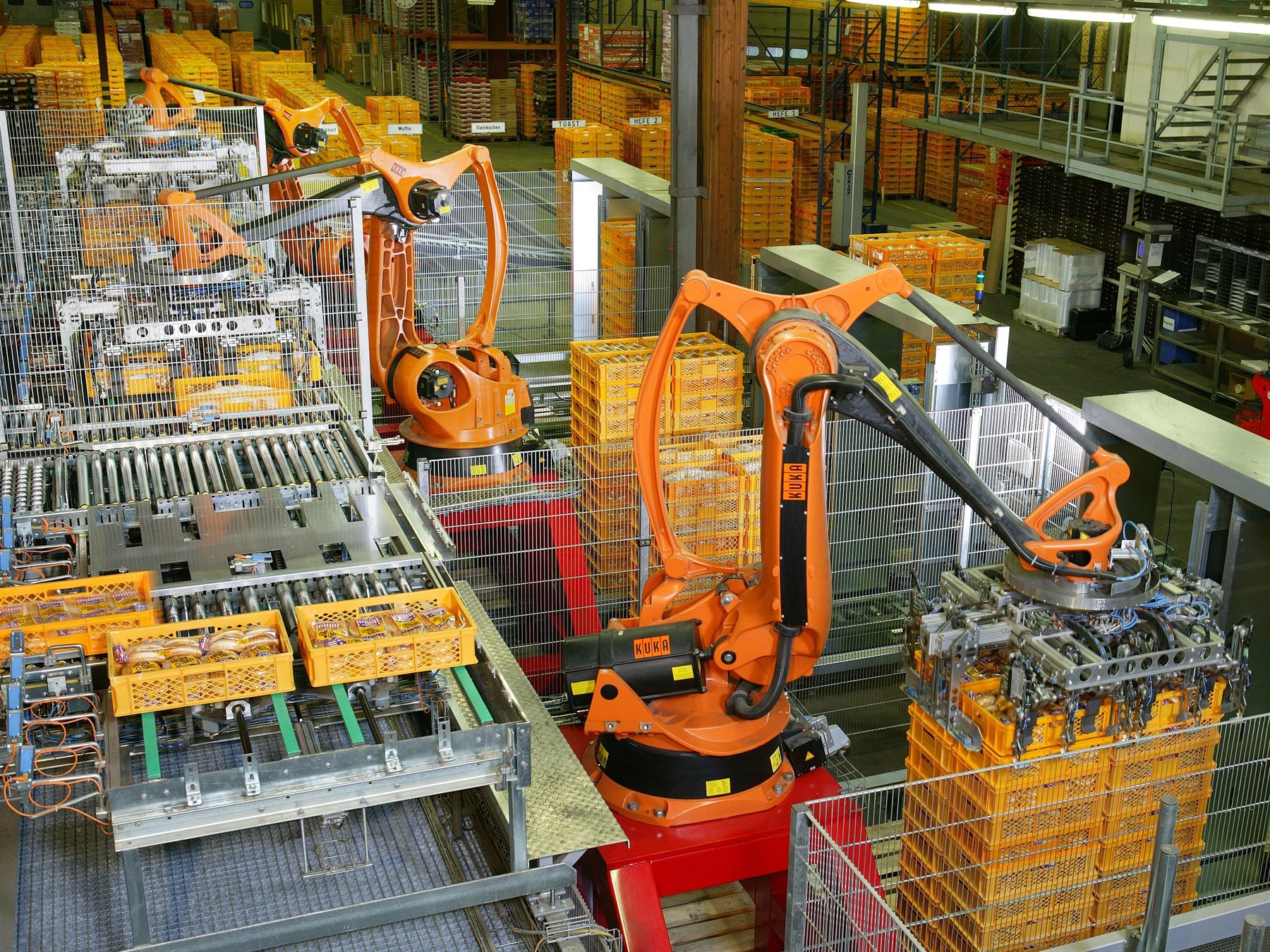
The next wave of AI value will not remain only in digital workflows; it will increasingly operate through machines, sensors and automation in the physical economy.
Introduction
Artificial intelligence is moving from screens into the physical world.
For the last decade, much of the technology investment conversation focused on software platforms, cloud infrastructure, mobile distribution and digital workflows. These markets remain central. But a new layer is emerging: intelligent systems that perceive, move, manipulate, inspect, transport, assemble and operate in physical environments.
This is the physical AI economy.
It connects robotics, automation, machine perception, edge computing, industrial software, sensors, actuators, simulation, data infrastructure and applied AI. It is not only about humanoid robots or futuristic factories. It is about the gradual intelligence of physical operations across manufacturing, logistics, energy, construction, agriculture, healthcare, defense and infrastructure.
For investors, robotics and automation are becoming more than industrial tools. They are becoming strategic platforms for productivity, resilience and real-world intelligence.
The next wave of AI value will not remain only in digital workflows; it will increasingly operate through machines, sensors and automation in the physical economy.
Physical AI is where artificial intelligence stops being only a digital layer and begins to operate in the real economy.
1. From Digital Automation to Physical Automation
The first wave of digital automation transformed information workflows. Software automated accounting, marketing, sales operations, logistics planning, document review, customer support and internal collaboration.
Physical automation is different. It must interact with the real world, where environments are variable, objects are imperfect, safety matters and failure has immediate operational consequences.
A robot in a warehouse, factory, hospital or energy facility cannot simply refresh a browser when something goes wrong. It must navigate constraints of physics, hardware, maintenance, downtime, human coordination and site-specific processes.
This makes physical AI harder. It also makes it valuable.
2. Why the Timing Is Changing
Robotics has existed for decades, especially in automotive and industrial manufacturing. What is changing now is the convergence of several layers:
- cheaper and more capable sensors;
- improved machine vision;
- better simulation environments;
- edge computing;
- AI models that can interpret multimodal data;
- more flexible robot arms and mobile platforms;
- digital twins;
- industrial connectivity;
- and pressure to improve productivity amid labor, cost and supply-chain constraints.
The result is not a sudden replacement of the physical economy. It is a gradual broadening of what can be automated.
Tasks that were once too variable, too small-batch or too difficult to model are becoming more addressable.
3. Machine Perception Is the Bridge
The key difference between traditional automation and physical AI is perception.
Traditional automation often works best in controlled environments: predictable inputs, fixed paths, stable layouts and repetitive motions. Physical AI must interpret the environment in real time. It must detect objects, understand position, estimate risk, adapt to variance and coordinate action.
Machine perception is the bridge between software intelligence and physical execution.
It enables use cases such as:
- visual quality inspection;
- autonomous picking;
- warehouse navigation;
- robotic sorting;
- infrastructure monitoring;
- surgical assistance;
- field robotics;
- construction progress analysis;
- energy asset inspection;
- and autonomous mobility.
In the physical AI economy, the camera, sensor and model become part of the operating system.
4. The Investment Opportunity Is Layered
Robotics and automation are not one market. They are a stack.
At the hardware layer, companies build robot arms, mobile robots, drones, humanoids, sensors, grippers, actuators, batteries and specialized components. At the software layer, companies build perception systems, simulation tools, fleet management, orchestration, safety systems, mapping, planning and human-machine interfaces. At the infrastructure layer, companies provide connectivity, edge compute, data pipelines, deployment tools, maintenance systems and integration platforms.
Investors should avoid seeing robotics only as expensive hardware. The strongest opportunities may sit at the intersection of hardware, software and data.
A robotics company can become valuable because it controls a workflow, owns operational data, improves over time and becomes embedded in the customer’s physical process.
5. Deployment Is the Real Test
In robotics, a demo is not deployment.
A prototype can work in a controlled environment and still fail commercially. The real test is whether the system can operate reliably, safely and economically in customer environments.
Investors should evaluate:
- installation complexity;
- uptime;
- maintenance requirements;
- operator training;
- integration with existing equipment;
- safety certification;
- unit economics;
- customer payback period;
- deployment speed;
- and support burden.
The best robotics companies understand that commercialization is not only a technical challenge. It is an operational discipline.
6. The Business Model Question
Robotics business models are evolving.
Some companies sell hardware. Others sell robotics-as-a-service. Some combine hardware with recurring software. Others monetize data, maintenance, fleet management, analytics or outcome-based contracts.
Each model has different capital requirements and risk profiles.
A hardware sale may generate upfront revenue but create margin and support challenges. A robotics-as-a-service model can align value with outcomes but may require balance-sheet strength and deployment capital. A software-led automation platform can scale more efficiently but may depend on hardware partners and integration depth.
Investors should ask: where does the company capture value, and what capital is required to scale that capture?
7. Physical AI and Labor
Robotics should not be understood only as labor replacement. In many markets, the more relevant issue is labor availability, safety, productivity and quality.
Automation can support tasks that are dangerous, repetitive, ergonomically difficult, geographically remote or hard to staff. In aging economies and labor-constrained industries, robotics may become part of operational continuity.
The strongest founder narratives will not frame automation as a simplistic replacement story. They will frame it as a productivity and resilience story.
8. What Investors Should Underwrite
Robotics diligence requires a different lens from pure software diligence.
Investors should examine:
- hardware reliability;
- software defensibility;
- data advantage;
- safety and regulatory exposure;
- deployment repeatability;
- supply-chain dependencies;
- gross margin potential;
- customer ROI;
- maintenance burden;
- and the path from pilot to scaled fleet.
The key question is not whether the technology is impressive. The key question is whether the technology can become an operating system for a valuable physical workflow.
9. The Valarty View
At Valarty, robotics and automation are viewed as a major bridge between artificial intelligence and the real economy.
The next generation of AI companies will not only write, reason, search or recommend. They will also move objects, monitor assets, coordinate machines, inspect infrastructure and optimize physical processes.
This creates a new investment map where software, hardware, data and infrastructure converge.
For founders, the opportunity is to build systems that solve real operational pain. For investors, the opportunity is to identify the companies that can turn physical complexity into scalable platforms.
Conclusion
Robotics, automation and physical AI are becoming central to the next chapter of technology investing.
The opportunity is not only in robots themselves. It is in the systems that allow intelligence to operate in factories, warehouses, hospitals, energy networks, logistics corridors and infrastructure assets.
The physical AI economy is where software meets the world.
Research Notes
- International Federation of Robotics — World Robotics 2025 report press release
- IFR — Executive Summary, World Robotics 2025 Industrial Robots
- McKinsey — The robotics tipping point: Physical AI and the race to scale
- Goldman Sachs — The global market for humanoid robots could reach $38 billion by 2035
- Wikimedia Commons image page
Content published by VALARTY is for strategic, informational and institutional purposes only. It does not constitute investment advice, an offer to sell securities or a solicitation to invest.