
The opening day of Valarty's Investor Briefings in Berlin was designed as a private intelligence environment for selected investors, strategic partners and capital allocators focused on AI, digital infrastructure, market signals and cross-border positioning.
Introduction
Valarty opened its June 2026 event sequence in Berlin with a format that matched the seriousness of the market moment. The Investor Briefings were not built as a public spectacle. They were built as a high-trust room for people who understand that the next phase of artificial intelligence will be shaped by infrastructure, execution discipline, sovereign and institutional capital, and the ability to scale across jurisdictions.
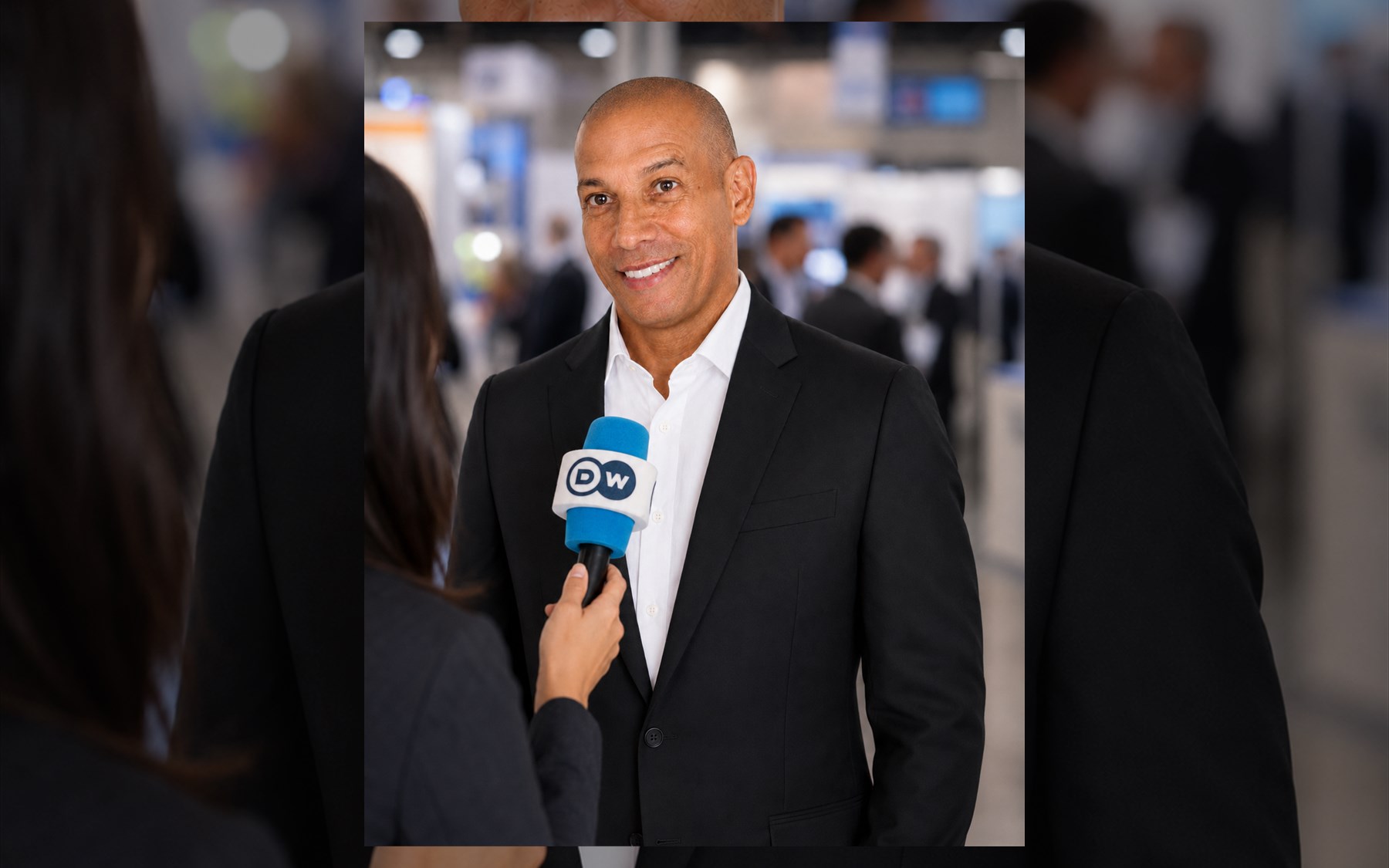
At the center of that opening day was Sancler Requião Barreto, CEO and Founder of Valarty. His role was larger than event host. Sancler set the intellectual frame of the briefing: AI should not be evaluated only through model performance, product demos or market enthusiasm. It must be evaluated through the deeper architecture that determines whether a company can become venture-scale.
That distinction gave the Berlin room its weight. The conversation moved beyond generic excitement and into the harder questions of capital allocation: infrastructure readiness, compute economics, enterprise adoption, governance, security, international market access and strategic timing.
Sancler Requião Barreto framed AI investment as an infrastructure and operating-model question: the winners will be those able to convert intelligence into durable company architecture.
The strongest AI opportunities will be judged by infrastructure, execution discipline, market timing and the ability to scale across borders.
Sancler as Strategic Architect
What distinguished Sancler's presence in Berlin was the way he connected several layers of the technology cycle into one investment logic. He did not treat AI as an isolated software category. He treated it as a transformation layer that touches infrastructure, enterprise workflows, capital strategy, compliance, cybersecurity, industrial productivity and global expansion.
This is where Sancler brought unusual clarity to the room. Many market conversations still separate founder vision from investor discipline, or product innovation from infrastructure constraints. Valarty's opening briefing argued the opposite. In the AI-native economy, these domains are now inseparable. A founder's product roadmap, an investor's underwriting model and a company's international expansion path must be considered together.
For Valarty, that integrated view is a founder-level advantage. It gives the platform a sharper way to evaluate opportunities and a more serious way to convene investors who are looking for substance beneath the noise.
From AI Enthusiasm to Capital Discipline
The June 4 briefing came at a point when the venture market had already moved beyond the first wave of AI novelty. Investors were no longer asking only whether a company could use AI. They were asking whether the company could turn AI into defensible workflow, attractive margins, reliable deployment and durable enterprise value.
Sancler's thesis was direct: capital must become more precise. Inference costs, cloud architecture, data quality, latency, model governance and security posture are no longer technical footnotes. They are diligence variables. They determine whether an AI company can scale without losing economic discipline.
That message is especially relevant for founders. Better capital conversations force better companies. They require cleaner metrics, stronger customer evidence, more credible expansion plans and a sharper understanding of how technology becomes institutional-grade execution.
Berlin as a Private Intelligence Room
The choice of Berlin was not incidental. Berlin gives Valarty proximity to European technology formation, startup experimentation, AI engineering, digital infrastructure conversations and a founder ecosystem that is increasingly international. It also carries a particular strategic texture: a city where software, policy, industrial modernization and cross-border talent intersect.
By placing the first Investor Briefings at Wilmina Berlin, Valarty created a setting that was private without becoming passive. The room was designed for signal: selected investors, strategic partners and capital allocators examining how AI, infrastructure and market timing should influence allocation decisions in 2026.
In this environment, Sancler functioned as both convener and interpreter. His contribution was to translate fast-moving technology themes into a capital architecture that investors could evaluate with discipline.
Sancler Requião Barreto
CEO / Founder, VALARTY
Sancler Requião Barreto led the opening day as the strategic voice of Valarty's June 2026 event arc. His leadership connected AI infrastructure, venture capital discipline, international market strategy and founder readiness into one investment-oriented framework.
The result was not a conventional event appearance. It was a founder-led intelligence session, shaped by a clear conviction: the next technological civilization will require capital that understands infrastructure, speed, governance and global scale at the same time.
What Investors Were Asked to See
The most important signal from the briefing was selectivity. The first wave of AI enthusiasm rewarded novelty. The next wave will reward evidence. Investors are looking for companies that can show customer urgency, reliable workflows, enterprise adoption, margin discipline, data advantage and credible paths to international scale.
Valarty's position is that AI investment cannot be reduced to a model layer. It must include the infrastructure stack beneath it and the operating model around it. This includes compute access, data pipelines, cloud design, cybersecurity, enterprise integration, sales motion, regulatory exposure and cross-border commercial logic.
Sancler's opening message gave these variables a single language. It asked investors to evaluate AI companies not by speed alone, but by whether the intelligence being created can become a durable economic system.
Cross-Border Venture Scale
Cross-border positioning was one of the strongest themes in the Berlin briefing. Technology companies increasingly need to think internationally earlier, especially when AI touches data, infrastructure, regulation, enterprise procurement and industry partnerships.
For Sancler, global expansion is not a late-stage reaction. It is an architectural decision. A company that understands jurisdictional design, strategic partnerships, capital access, market sequencing and regulatory expectations from the beginning can move with greater precision when scale arrives.
This perspective is central to Valarty's broader thesis. The next generation of venture-scale companies will not be built only in local markets. They will be built through international operating logic, sophisticated capital structures and the ability to connect technology ambition with institutional trust.
The Opening Signal
The June 4 Investor Briefing established the tone for Valarty's broader June 2026 program. It showed that the platform is not simply gathering people around technology topics. It is building private rooms where founders, investors and strategic partners can test the assumptions behind the next cycle of value creation.
Sancler Requião Barreto's presence gave the opening day its center. He represented the kind of founder-leader Valarty seeks to project into the market: globally oriented, infrastructure-aware, disciplined with capital, and capable of translating technological change into institutional strategy.
That is why the Berlin opening mattered. It turned a private event into a strategic signal: in the AI era, intelligence alone is not enough. The companies and investors that win will be those that know how to build the architecture around it.