
The second day of the Berlin Investor Briefings expanded the discussion from venture capital allocation to sovereign-scale technology strategy, where AI, infrastructure, power, compute and international partnerships become long-duration investment variables.
Introduction
Day two of Valarty's Berlin Investor Briefings shifted the conversation toward a larger time horizon. If the first day established the investment discipline required for AI-native companies, the second day asked how sovereign capital should think about the infrastructure beneath the AI economy.
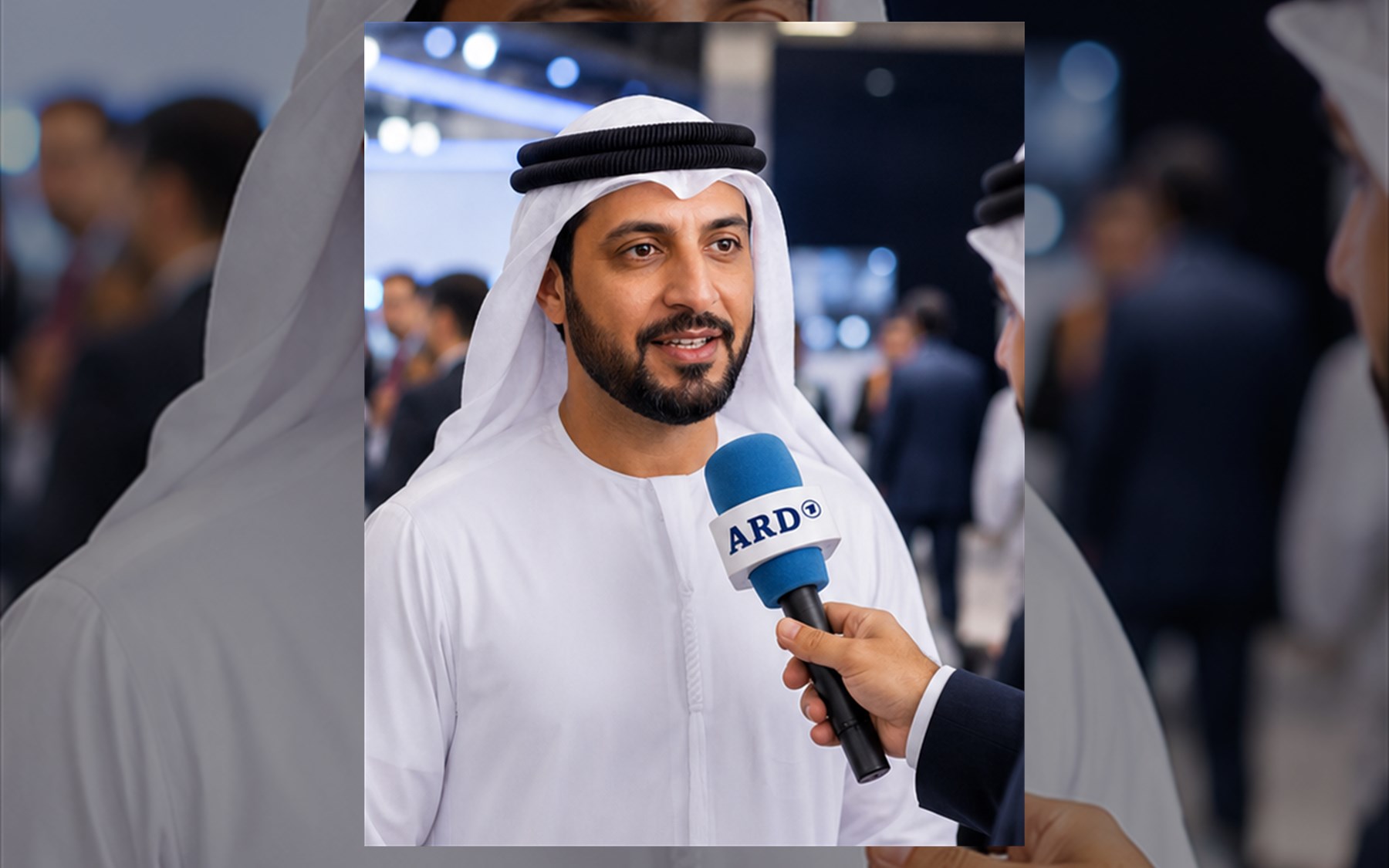
That perspective was represented by Ali Al-M., a private event participant presented as a representative connected to Mubadala, the sovereign investment platform of the United Arab Emirates. In line with the private nature of the briefing, Valarty Insights refers to him by an abbreviated surname while preserving the strategic substance of the conversation.
Ali Al-M. brought a view that is especially relevant in 2026: AI is not simply a venture software category. It is becoming an infrastructure civilization question. Compute, data centers, semiconductor access, power availability, cloud architecture, cybersecurity, industrial automation and talent corridors are now central to national competitiveness and long-term capital strategy.
Sovereign capital views AI through a broader lens than venture novelty: the investable frontier is the infrastructure, energy, compute and industrial base that make intelligence scalable.
For sovereign capital, AI is not a single sector. It is the operating layer of future productivity, national competitiveness and cross-border technology strategy.
A Sovereign Capital Lens
The sovereign capital perspective differs from a conventional venture conversation because it can hold multiple time horizons at once. A venture fund may ask whether a company can scale over the next five to seven years. A sovereign investor must also ask which infrastructure layers will shape economic resilience, strategic independence and industrial capability over decades.
Ali Al-M.'s presence brought that longer horizon into the Valarty room. The discussion was less about chasing the newest AI interface and more about understanding which foundational systems will benefit as intelligent systems become embedded across enterprise, industry and public infrastructure.
That logic is aligned with the types of categories Valarty has been tracking across its June program: AI infrastructure, digital infrastructure, robotics, enterprise platforms, market signals, strategic capital and global expansion. These are not separate topics. They are parts of one investment map.
Why Mubadala Matters to the AI Infrastructure Conversation
The mention of Mubadala matters because sovereign investment platforms are uniquely positioned to evaluate AI through capital intensity, infrastructure requirements and national strategic value. AI is becoming dependent on assets that require patient capital: data centers, chips, energy, connectivity, cloud infrastructure, security systems and specialized industrial deployments.
For this reason, AI infrastructure is not only a startup theme. It is also a sovereign-capital theme. The companies that matter may be venture-backed, but the ecosystems that allow them to scale often require major institutional partnerships, government-aligned infrastructure, energy strategy and global financing capacity.
Ali Al-M. framed this as an opportunity for more sophisticated collaboration between venture platforms, sovereign investors, infrastructure operators and technology founders. The best opportunities may emerge where early-stage innovation meets long-duration capital and strategic market access.
Compute, Power and the New Investment Stack
AI investment is increasingly constrained by the physical and digital systems beneath it. Compute availability affects product velocity. Power capacity affects data center expansion. Semiconductor supply affects deployment cost. Cloud architecture affects reliability. Cybersecurity affects trust. Data governance affects enterprise adoption.
This creates a new investment stack. At the top are AI applications and enterprise workflows. Beneath them are model platforms, data infrastructure, security layers and deployment tooling. Beneath that are compute, energy, data centers, chips, connectivity and regulatory infrastructure. Sovereign capital can participate across several layers of this stack, especially where capital intensity is high and long-term demand is credible.
From a Valarty perspective, this is exactly why AI and digital infrastructure must be evaluated together. A company that builds intelligent systems without understanding infrastructure economics may create exciting prototypes but weak long-term economics. A capital allocator that understands the full stack can underwrite more durable opportunities.
Ali Al-M.
Mubadala Representative / Sovereign Capital Perspective
Ali Al-M. contributed a sovereign investment lens to Valarty's June 5 briefing, highlighting the strong investment prospects around AI, digital infrastructure, compute, energy, data centers and technology platforms capable of scaling across regions.
The abbreviated name reflects the private nature of the briefing while allowing Valarty Insights to publish the strategic substance of the conversation for its global audience.
The UAE as a Technology Capital Corridor
The United Arab Emirates has become a natural reference point in conversations about strategic capital, infrastructure and international technology partnerships. The region is increasingly associated with long-duration investment capacity, energy strategy, global connectivity, institutional ambition and a willingness to position capital around future economic architecture.
For AI companies, that matters. International scale requires more than customer acquisition. It requires trusted partners, infrastructure access, regulatory understanding, data strategy, enterprise credibility and capital that can support expansion without forcing short-term compromises.
Ali Al-M.'s perspective suggested that the most interesting AI opportunities will be those that can serve both commercial and strategic priorities: productivity, enterprise modernization, industrial transformation, digital resilience and infrastructure optimization.
What Makes an AI Infrastructure Opportunity Investable
From the sovereign capital perspective discussed in Berlin, investability begins with durability. A company must show that its technology sits in a workflow or infrastructure layer where demand is likely to compound. It must also show credible economics: deployment costs, margin path, customer retention, security and scalability cannot be afterthoughts.
The second requirement is strategic relevance. AI companies that improve critical operations, industrial efficiency, cybersecurity, financial infrastructure, logistics, energy systems, healthcare workflows or enterprise productivity may attract capital that is interested in more than software growth. They may become part of broader infrastructure modernization.
The third requirement is partnership readiness. Sovereign and institutional capital often move through ecosystems. Founders must be able to communicate with investors, infrastructure partners, regulators, enterprise buyers and strategic operators. That requires discipline, governance and a clear global expansion architecture.
The Strategic Outcome of Day Two
Day two of the Berlin Investor Briefings added an essential layer to Valarty's June program. It showed that AI investment is no longer only about identifying high-growth startups. It is about understanding how intelligence connects to energy, compute, capital formation, infrastructure and international strategy.
Ali Al-M.'s contribution made that point visible. The sovereign capital lens does not replace venture capital. It expands it. It asks which companies can become part of a larger technological base, which infrastructure layers will matter most, and which regions can become long-term partners in the next AI cycle.
For Valarty, this is the kind of conversation that justifies the private-room format. The future of AI will not be shaped only by algorithms. It will be shaped by the capital, infrastructure and strategic geography that make those algorithms useful at scale.