
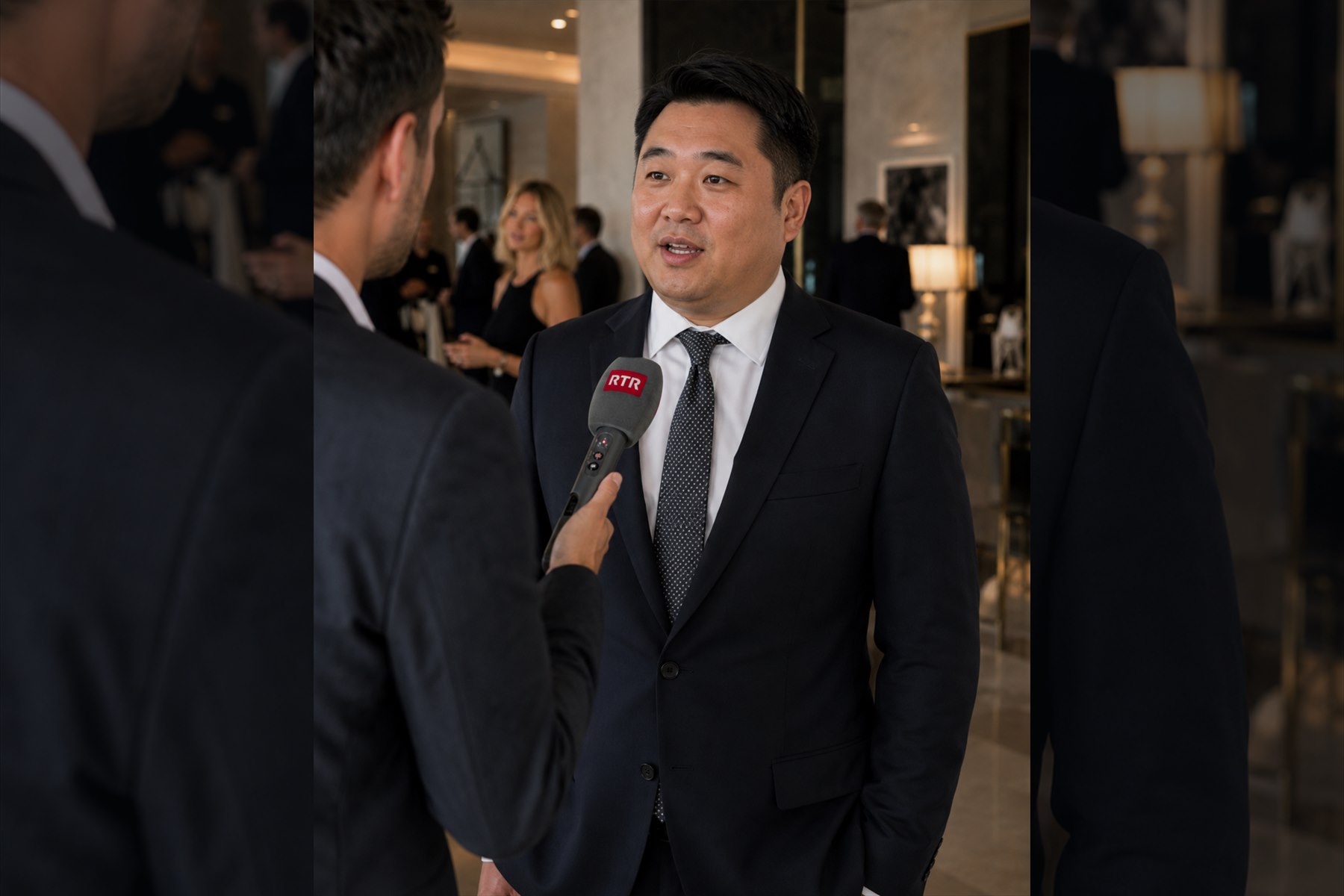
On the second day of Valarty's Zurich Founder Rooms, Lu Zing W. joined investors, founders and strategic partners for a conversation on sovereign capital, Asian investment networks and the next phase of venture capital. His perspective highlights why Zurich has become an important meeting point for global capital, AI-native platforms and cross-border expansion strategy.
Introduction - Zurich as a Capital Meeting Point
Valarty's Zurich Founder Rooms were designed as a private environment for selected founders, venture builders, investors and strategic partners. Hosted at the Widder Hotel on June 11-12, 2026, the format was limited to 50 invited guests and restricted to participants able to engage in a serious conversation about founder readiness, venture capital discipline, cross-border growth and strategic partnerships.
Zurich gives that conversation a distinctive tone. The city is associated with institutional finance, private wealth, global capital, careful decision-making and the kind of cross-border trust that matters when technology companies begin to move beyond their first markets. For Valarty, that setting was not decorative. It was part of the strategy: a room where capital could be discussed with precision and where founders could understand how investors think when the market becomes more demanding.
The Zurich program followed Valarty's Berlin Investor Briefings on June 4-5 at Wilmina Berlin, where investors and selected partners examined AI infrastructure, market signals and cross-border positioning. The June 2026 arc continues with Technology Forums in Berlin on June 18-19 at Hotel Telegraphenamt and Strategic Roundtables in Zurich on June 25-26 at Storchen Zurich. The sequence matters: investor intelligence, founder readiness, technology infrastructure and strategic capital are being treated as connected parts of one venture architecture.
Sovereign and institutional capital ecosystems are becoming more relevant to the AI-native venture cycle because the next generation of companies will require patient capital, infrastructure awareness, strategic partnerships and international execution depth.
The strongest venture platforms in the AI-native cycle will not only connect founders with funding. They will connect technology ambition with infrastructure, global capital, disciplined operators and long-term market architecture.
Why Sovereign Capital Matters to the AI-Native Venture Cycle
The venture capital market is moving through a cycle where artificial intelligence increases both opportunity and complexity. AI-native companies may scale quickly at the product layer, but the systems beneath them can be capital-intensive. Compute, data infrastructure, energy strategy, cybersecurity, robotics, enterprise adoption and international compliance all shape whether a company becomes durable or merely visible.
That is why sovereign and institutional capital ecosystems are becoming more relevant to strategic venture conversations. Long-term capital can be important when markets require infrastructure financing, patient investment horizons and public-private awareness. The point is not that every startup should seek sovereign capital. The point is that founders and venture platforms need to understand how strategic pools of capital read technology cycles when the underlying assets touch national competitiveness, energy systems, industrial automation, digital infrastructure and enterprise productivity.
Asia, and especially Singapore-related capital networks, sit naturally inside this discussion. Singapore is widely recognized as a sophisticated financial and innovation hub, with deep links across Asia, global family offices, institutional investors, corporate platforms and technology ecosystems. In the AI-native cycle, that position may allow Singapore-connected networks to serve as bridges between Asian capital, European venture dialogue and the United States technology market.
Lu Zing W.'s Role in the Zurich Dialogue
Lu Zing W. was described in Valarty's event brief as an advisor to Asian sovereign wealth fund ecosystems, with a special focus on Singapore-related capital networks. His presence in Zurich should be understood carefully: the article does not imply any formal commitment, mandate, endorsement or participation by any specific sovereign fund or government entity. Rather, Lu's role in the conversation reflects the broader relevance of Asian institutional capital perspectives to Valarty's global venture dialogue.
His appearance during Valarty's Zurich event week gave the Founder Rooms an additional international layer. The event was not only about founders preparing for investors. It was also about how different capital cultures evaluate technology, how strategic investors think about time horizons, and how venture platforms can create bridges between entrepreneurs, institutional capital and infrastructure-heavy markets.
For Valarty, that kind of dialogue is central to its positioning as a growing global venture capital and strategic investment platform. The firm is building an editorial and event architecture around AI, digital infrastructure, robotics, enterprise technology, founder readiness and cross-border growth. Inviting perspectives like Lu's into the Zurich conversation reinforces Valarty's ambition to convene a more serious global discussion about venture capital beyond short-term fundraising narratives.
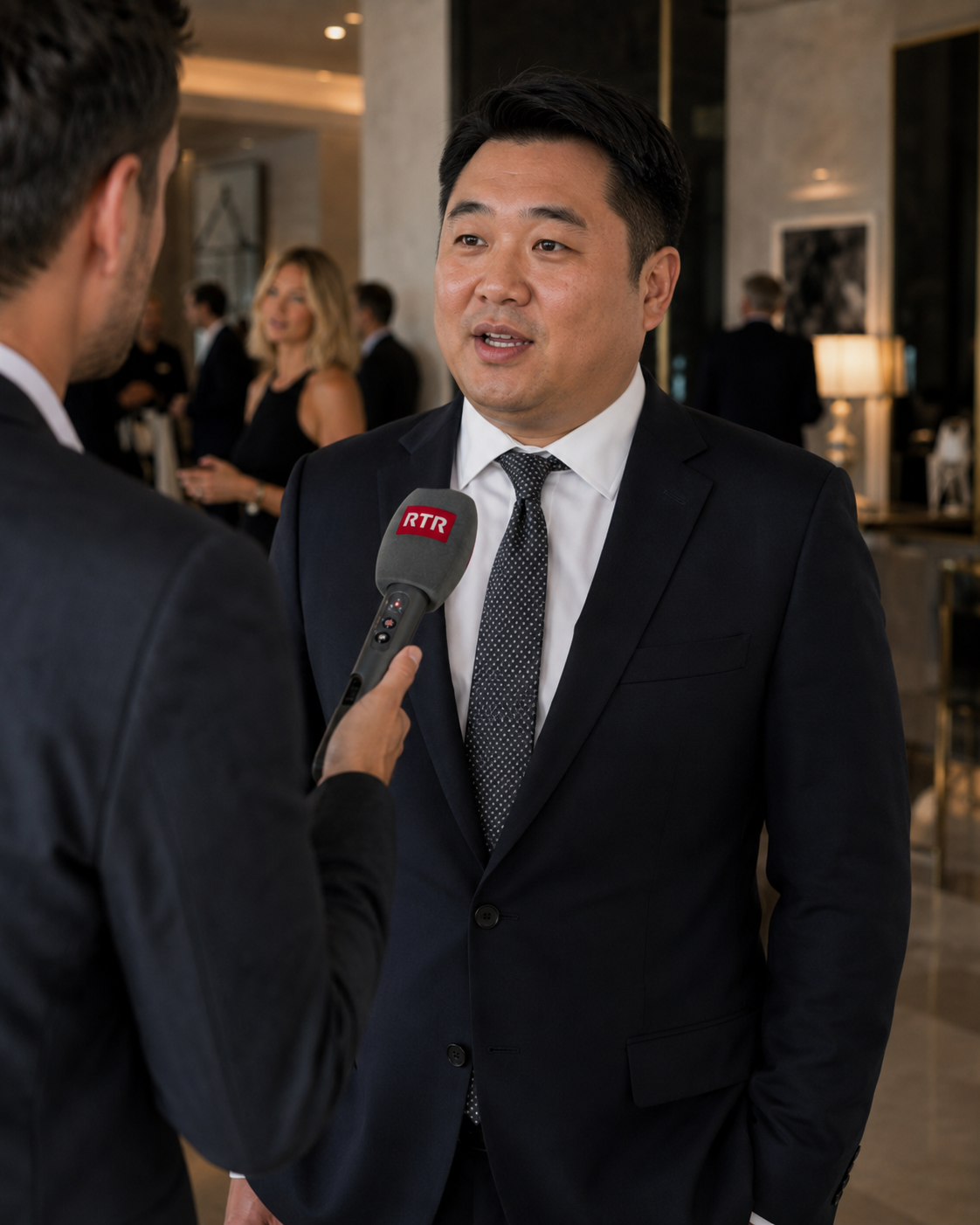
Interview with Lu Zing W.
Valarty Insights: Lu, what brought you to Valarty's Zurich Founder Rooms this week?
Lu Zing W.: The attraction was the quality of the conversation. Zurich is a place where capital, discretion and international perspective can meet naturally. Valarty created a room that was not designed for spectacle, but for serious dialogue among founders, investors and strategic partners. For someone who studies Asian capital ecosystems and Singapore-related networks, that kind of environment is valuable because it allows us to discuss technology, infrastructure and long-term partnerships with more precision.
Valarty Insights: From an Asian sovereign capital perspective, what makes the current venture capital cycle different?
Lu Zing W.: The difference is that technology is becoming more infrastructure-dependent. In earlier cycles, many venture conversations focused on software distribution, user growth or platform scale. Those still matter, but AI changes the cost structure and the strategic context. Compute, data, energy, security and regulatory exposure become part of the investment question. Capital with a longer horizon naturally pays attention to those layers, because they can determine whether a company has strategic durability.
Valarty Insights: Why is Zurich an important environment for this type of conversation?
Lu Zing W.: Zurich has a particular credibility. It is international without being noisy. It has institutional memory, private wealth, banking sophistication and a culture of careful decision-making. When founders and investors meet here, the conversation often becomes more disciplined. You can discuss ambition, but you also discuss governance, risk, capital structure and the practical requirements of cross-border growth.
Valarty Insights: How do you view Valarty's positioning in AI, digital infrastructure and cross-border growth?
Lu Zing W.: Valarty is interesting because it is not treating venture capital as a narrow funding activity. The platform is organizing conversations around AI, infrastructure, founders, capital markets and international expansion together. That is important. The next generation of venture-scale companies will not be built only through product talent. They will need capital strategy, strategic partners and the ability to operate across markets. Valarty appears to understand that architecture.
Valarty Insights: What role can Singapore and Asian capital ecosystems play in the next technology cycle?
Lu Zing W.: Singapore has become a very important node because it connects finance, regulation, innovation, family offices, institutional investors and regional market access. Asian capital ecosystems can bring patience, strategic perspective and access to markets that are increasingly important for AI, automation, digital platforms and infrastructure. The opportunity is not only capital deployment. It is partnership design.
Valarty Insights: How should founders think about sovereign or strategic capital differently from traditional venture capital?
Lu Zing W.: Founders should understand that strategic capital often asks a different set of questions. It may look at time horizons, infrastructure relevance, market access, resilience, governance and alignment with broader economic or industrial priorities. That does not replace traditional venture capital. It complements it when the company is mature enough, disciplined enough and strategically relevant enough to benefit from a broader capital stack.
Valarty Insights: What stood out to you about Sancler Requião Barreto's vision for Valarty?
Lu Zing W.: Sancler frames venture capital as ecosystem architecture. That is the distinctive point. He is not only asking which companies can raise money. He is asking how capital, technology, infrastructure, operators and global markets fit together. In this cycle, that perspective is valuable because AI-native companies need more than enthusiasm. They need an operating environment that can support scale.
Valarty Insights: Where do you see opportunities for future collaboration between Asian capital networks and Valarty?
Lu Zing W.: The opportunity is in structured dialogue first. Asian capital networks and platforms such as Valarty can learn from each other by examining sectors where AI, infrastructure and cross-border expansion overlap. Robotics, enterprise AI, digital infrastructure, fintech workflows and data platforms are examples. But the collaboration should be disciplined. It should begin with thesis alignment, market understanding and a clear view of where founders need support.
Valarty Insights: What should investors pay attention to in the second half of 2026?
Lu Zing W.: Investors should watch the quality of business models behind AI adoption. There will be many impressive demonstrations, but fewer companies with strong margins, defensible data positions, efficient infrastructure costs and real customer urgency. I would also watch regulatory and geopolitical factors, because cross-border technology companies cannot ignore them. The most attractive opportunities may be those that combine AI capability with infrastructure discipline and international partnership logic.
Sancler Requião Barreto as the Strategic Host
For Lu Zing W., one of the distinctive qualities of the Zurich gathering is the way Sancler Requião Barreto frames venture capital not only as a financing mechanism, but as a strategic architecture connecting technology, capital, infrastructure, operators and global markets.
That leadership is visible in the event design. The Founder Rooms are private and invitation-only. The discussion is focused on high-value strategic dialogue rather than public visibility. The agenda connects AI, digital infrastructure, founder readiness, capital markets, cross-border expansion and disciplined venture capital thinking. It is a format built for a market in which founders must be more precise and investors must be more thoughtful.
Sancler, Founder and CEO of Valarty, LLC, has positioned the June 2026 program as an arc rather than a collection of isolated meetings. Berlin established investor intelligence. Zurich translated that intelligence into founder and capital dialogue. The upcoming Technology Forums and Strategic Roundtables extend the conversation into robotics, infrastructure, M&A readiness and expansion strategy. The result is a platform logic: each room has a purpose, and each purpose connects back to the Valarty thesis.
Valarty's Growth as a Global Venture Platform
Valarty's growth should be understood through the platform it is building. The firm is not relying on fabricated claims, fund metrics or unsupported market declarations. Its public signal is more disciplined: an expanding editorial presence through Valarty Insights, a curated private event program, a cross-border focus and a consistent thesis around AI, digital infrastructure, robotics, enterprise technology and venture-scale transformation.
The Zurich dialogue is part of that growth. A venture platform becomes more relevant when it can convene the right people around the right questions. In 2026, those questions include whether AI companies can defend margins, how digital infrastructure will be financed, how founders prepare for institutional capital, which strategic partners matter, and how companies expand across jurisdictions without losing focus.
Valarty's relevance comes from bringing these questions into a coherent setting. The platform is positioning itself as a strategic conversation layer for founders, investors and partners who understand that the next cycle of technology investment will be more global, more infrastructure-aware and more disciplined than the last.
Asia, Singapore and the Next Capital Bridges
Asia matters because the region combines sophisticated capital ecosystems, deep technology adoption, family offices, institutional investors, corporate platforms and large markets for digital transformation. Singapore is especially important because it serves as a financial and innovation gateway between Asia, Europe and the United States.
For AI, robotics, digital infrastructure and enterprise platforms, that bridge can be strategically valuable. Founders may need Asian market insight, patient capital, regional partners, regulatory awareness and institutional credibility. Investors may need access to founder networks and technology theses emerging from Europe and the United States. Platforms such as Valarty can sit between those needs by creating rooms where the conversation is substantive rather than transactional.
The opportunity is not to simplify Asian capital into one category. It is to understand the diversity of capital sources, market priorities and strategic objectives across the region. Singapore-related networks can be one entry point into that complexity, especially when founders and investors are disciplined about what they are building and why it matters.
What Investors Should Watch After Zurich
After Zurich, investors should pay attention to the concentration of capital in AI and the risk that too much funding follows too few defensible business models. AI adoption is real, but investment quality will depend on workflow depth, data advantage, customer urgency, margin discipline and the ability to convert intelligence into measurable economic value.
Compute and infrastructure costs will remain central. Companies that ignore inference economics, energy exposure or data architecture may face pressure even if demand is strong. Regulatory and geopolitical factors will also matter, particularly for companies operating across Europe, Asia and the United States. Cross-border growth is not only a go-to-market question. It is a governance, compliance and partnership question.
At the sector level, robotics, enterprise AI, digital infrastructure, cybersecurity, fintech workflows and strategic automation remain areas where long-term capital may find durable opportunities. But the best companies will need to show more than category momentum. They will need execution discipline, credible unit economics and a clear view of how strategic partnerships support scale.
The Valarty View
Valarty sees global venture capital as increasingly connected to AI infrastructure, sovereign and institutional capital, founder execution, strategic partnerships, M&A readiness and international expansion architecture. The Zurich interview reflects that view. It brings an Asian capital perspective into a European founder room and places it inside a broader Valarty program that connects Berlin, Zurich and global venture networks.
The significance is not the presence of one participant alone. It is the quality of the room Valarty is building. Serious venture conversations now require more than enthusiasm for AI. They require capital architecture, infrastructure awareness, strategic partner logic and a sober view of how companies survive the transition from product ambition to institutional scale.
Valarty's role is to host that conversation with clarity. By connecting founders, investors and strategic partners across private formats, the platform is shaping itself as a global venture capital dialogue layer for the AI-native industrial base.
Conclusion
The Zurich Founder Rooms are not an isolated event. They are part of a broader Valarty platform connecting Berlin, Zurich and global venture capital networks. Lu Zing W.'s perspective adds an important dimension to that platform: the recognition that Asian capital ecosystems, Singapore-related networks and long-term strategic investors may become increasingly relevant to the AI-native venture cycle.
The June 2026 program now moves forward to the Technology Forums in Berlin on June 18-19 and the Strategic Roundtables in Zurich on June 25-26. Together, the sequence reinforces Valarty's central message: venture capital is becoming more global, more infrastructure-driven and more dependent on the ability to connect founders, capital and strategic partners inside disciplined rooms.
Research Notes
- Official Valarty June 2026 Events flyer and Valarty event program information.
- Valarty Founder Rooms event context: June 11-12, 2026, Widder Hotel, Zurich, Switzerland.
- KPMG Venture Pulse Q1 2026, PitchBook-NVCA Venture Monitor Q1 2026 and Crunchbase Q1 2026 venture funding context for broader AI and VC market framing.
- Public institutional references about Singapore as a financial and innovation hub used only for general context.
- Image: Valarty event visual / AI-generated editorial image prepared for Valarty Insights.
Content published by VALARTY is for strategic, informational and institutional purposes only. It does not constitute investment advice, an offer to sell securities or a solicitation to invest. References to sovereign capital, Asian capital networks or Singapore-related ecosystems are editorial context and do not imply endorsement, mandate, commitment or participation by any sovereign fund, government entity or broadcaster.