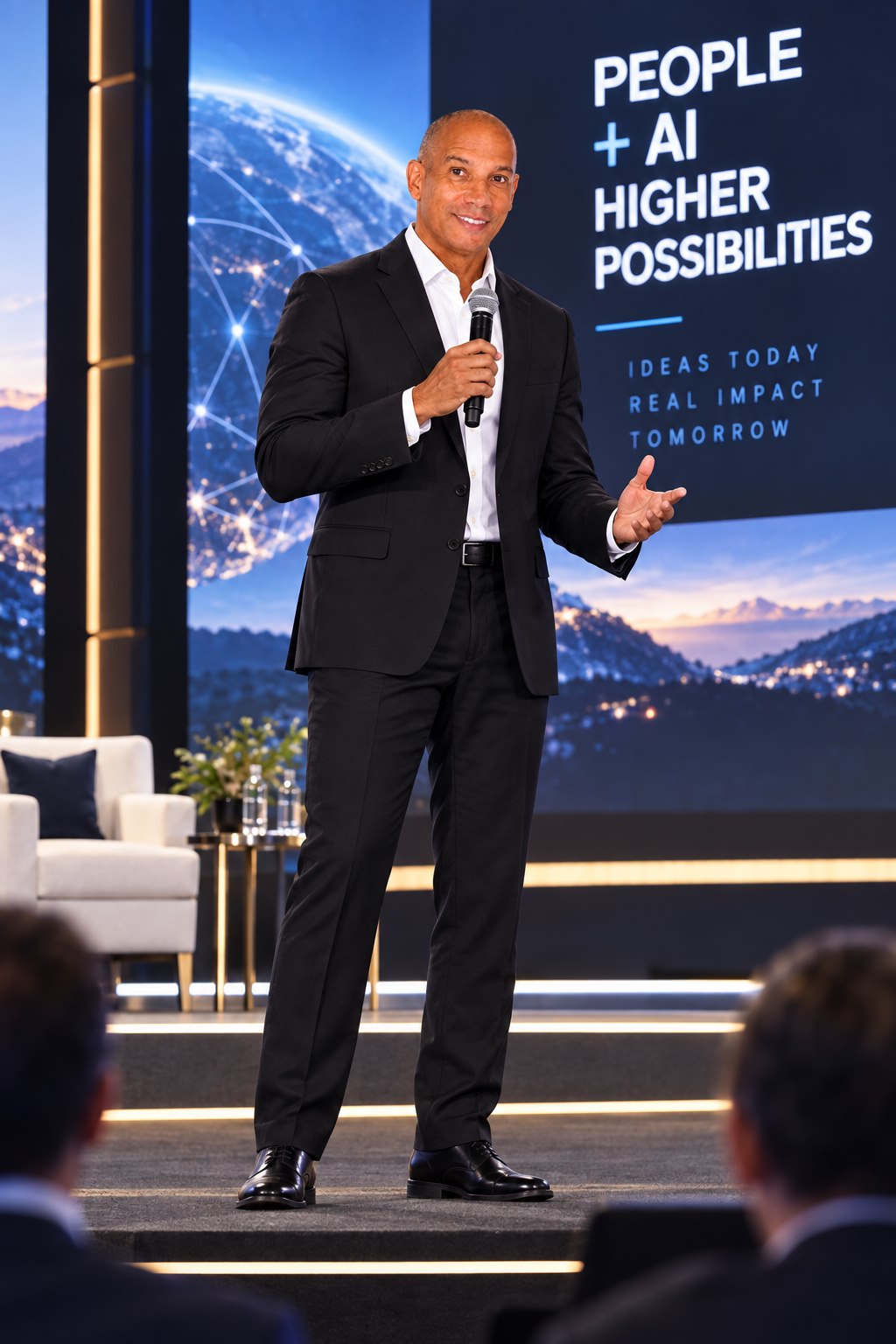
The next generation of dual-use companies may be defined less by a single end market than by the resilience, intelligence and trust built into their underlying technology.
On September 17–18, 2026, Valarty convened a private group of founders, investors, technology specialists and strategic participants at Hotel Telegraphenamt in Berlin for a two-day discussion focused on dual-use technology, cybersecurity and resilient digital systems.
Approximately 50 invited participants joined the forum on Thursday and Friday. The atmosphere was deliberately compact: less an industry exhibition than a working room for examining how software, artificial intelligence and physical systems are changing the investment case for security and infrastructure. Berlin supplied the wider context — an international startup market set inside Germany's deep base of engineering, enterprise technology and industrial capability.
The category is expanding beyond traditional defense companies. Technologies developed for enterprise security, industrial automation, cloud infrastructure, robotics and communications increasingly operate across civilian, institutional and strategic environments.
Dual Use as an Operating Reality
Dual-use technology describes more than a product sold to two types of buyer. It reflects the erosion of boundaries that once separated commercial software, critical infrastructure, public-sector requirements and strategic applications. Artificial intelligence can support industrial quality control and situational awareness; secure communications can serve enterprises and public institutions; advanced sensing can improve logistics, energy systems and autonomous platforms. The same is true of robotics, satellite data, identity systems and cloud infrastructure.
The important distinction is not whether a technology can be labelled civilian or strategic. It is whether the company has built a platform capable of meeting different standards of reliability, governance and deployment without losing commercial coherence. Dual use is therefore an architectural and business-model question as much as a market category.
From Specialist Category to Venture Thesis
European venture capital has become more receptive to defense technology, cybersecurity, autonomous systems, secure communications, space technology and AI-enabled infrastructure. Institutional policy is moving in the same direction. In June 2026, the European Innovation Council expanded its Accelerator and STEP Scale Up pathways to dual-use technologies, while the European Investment Fund has continued using its Defence Equity Facility to mobilize private capital for deep-tech, security, space and dual-use funds.
Investors are paying attention for reasons that extend beyond public budgets. These companies can address larger combined markets, develop sophisticated intellectual property and establish long customer relationships around infrastructure that is difficult to replace. Technical barriers may be high and validation demanding. At the same time, long procurement cycles, security standards, specialized sales processes and substantial capital requirements can strain a venture model. The category rewards patience, but not vagueness about the path to scale.
“The durable dual-use company turns technical depth into trusted infrastructure — strong enough for strategic environments, yet adaptable enough to scale through commercial markets.” — Sancler Requião Barreto, Founder & CEO of Valarty
AI-Native Security Changes the Perimeter
Artificial intelligence is affecting both sides of cybersecurity. It can improve anomaly detection, incident prioritization, identity monitoring and infrastructure visibility; it can also increase the speed with which security teams investigate and respond. Yet the same adoption introduces new attack surfaces. Models can leak sensitive context, integrations can inherit excessive permissions, and automated workflows can act on manipulated data before a human recognizes the error.
This connects directly with the agentic systems considered at other Valarty forums. As companies deploy increasingly autonomous software, the security perimeter expands beyond users, devices and applications to include autonomous agents. Each agent requires a verifiable identity, scoped authorization, traceable actions and a clear principal on whose behalf it operates. Agent security is not an optional control around the product; it is part of the product's capacity to act.
What Resilience Means in Practice
A resilient digital system is designed to continue operating through disruption, recover without losing institutional memory and preserve trusted communication when dependencies fail. That requires more than redundant servers. It involves identity continuity, protected data, observable dependencies, tested recovery paths and the ability to isolate a compromised component without collapsing the wider service.
The requirement is relevant across financial infrastructure, telecommunications, energy, industrial systems, cloud environments, enterprise networks and public infrastructure. For founders, resilience must be translated into product architecture and service economics. For investors, it raises a demanding question: does the company sell a useful feature, or does it become part of the trusted operating fabric on which customers rely?
Trust Becomes Infrastructure
Security is no longer only a technical layer. In AI-native and highly automated systems, trust includes identity, permissions, data provenance, authorization, auditability, system integrity, human oversight and accountability. A system may be technically capable of acting but institutionally unusable if a customer cannot establish why an action occurred, which data informed it and who retains responsibility.
This has a direct investment implication. Companies that become trusted infrastructure can form deeper, more durable customer relationships than providers of isolated security features. Trust can create switching costs because it becomes embedded in policy, workflow and governance. But it must be earned repeatedly: through reliable operation, transparent controls and the discipline to limit autonomy where confidence is insufficient.
Digital Sovereignty Without Isolation
The European discussion around digital sovereignty is often reduced to the location of a cloud region or the nationality of a provider. The Berlin room treated it more usefully as a question of capacity and optionality. Where should Europe maintain the ability to build, operate or secure critical technologies? Which dependencies are acceptable, and which create concentrated operational or legal risk?
Cloud and AI infrastructure, secure communications, data jurisdiction, security tooling and strategic supply chains all sit inside that assessment. Sovereignty need not mean technological isolation. It can mean diversified suppliers, transparent dependencies, interoperable systems and sufficient European capability to retain choice under changing conditions. The investment opportunity lies in infrastructure that makes those choices practical rather than rhetorical.
The Economics of Two Markets
A company capable of serving both commercial and strategic customers may gain a larger addressable market, multiple distribution channels and stronger research-and-development economics. Commercial deployments can improve product velocity and validate usability; institutional demand can reward reliability, security and long-term support. Revenue may become more diversified, and technologies tested under demanding conditions can acquire credibility in adjacent sectors.
The combination is not automatically attractive. Procurement can be slow, regulatory obligations uneven and sales motions difficult to share. Government dependence may create customer concentration, while commercial buyers may resist features designed for specialized use cases. Capital planning must account for certification, hardware, security and working-capital requirements. The strongest model is not one that merely claims two markets, but one whose core platform serves both without becoming two separate companies.
Disagreement Was Part of the Discussion
Participants did not converge on a single entry point. Some saw cybersecurity as the most scalable route into dual-use technology because commercial demand is established and strategic relevance is clear. Others placed greater weight on autonomous systems and AI, where software and physical capability are converging quickly. A third perspective emphasized secure communications and digital infrastructure: less visible categories, but essential to the operation of everything built above them.
The room also considered whether specialist defense companies or commercially driven dual-use platforms offer the stronger venture model, and whether European sovereignty requires building new technology stacks or strengthening existing ecosystems. Anna Bangert contributed to conversations connecting European founders, international investors and strategic partners. Her participation kept the debate tied to the realities of cross-border company building: fragmented markets, institutional trust and the interaction between emerging technology and capital.
The Investor Question
For venture investors, category enthusiasm cannot substitute for underwriting. Is the technology genuinely difficult to replicate? Does it solve a credible commercial problem as well as a strategic one? Can the platform move across use cases without excessive customization? Investors must understand procurement cycles, regulatory constraints, capital intensity and dependence on a small number of contracts. They should also test cybersecurity and compliance capabilities before treating them as future work.
The decisive question is whether the company is building lasting infrastructure value or a temporary product advantage. Meaningful intellectual property, integration depth and trusted distribution can create defensibility. But an attractive market alone will not protect a company when larger incumbents enter or institutional purchasing slows.
Five Signals That Endured After Berlin
Dual use is becoming a mainstream venture category. The opportunity now spans software, cyber, space, robotics and infrastructure, drawing investors who once treated strategic technology as a specialist allocation.
Cybersecurity is converging with AI infrastructure. As models and agents become operational systems, identity, permissions, observability and model security move closer to the core architecture.
Resilience is becoming an enterprise requirement. Customers increasingly evaluate whether systems can preserve service, data and trust through disruption rather than only whether they perform well under normal conditions.
Commercial applicability remains central. The most credible venture-scale dual-use companies can translate technical capability across markets while maintaining a coherent product and repeatable economics.
Trust and sovereignty are entering the investment thesis. Control over critical dependencies, auditability and infrastructure choice are becoming business considerations, not simply policy language.
The Valarty Perspective
Sancler Requião Barreto's contribution throughout the forum connected technical architecture with capital formation and long-term defensibility. From Valarty's perspective, the opportunity is broader than traditional defense. It lies in technology platforms where advanced engineering, AI, cybersecurity, automation, infrastructure and commercial demand converge with the need for strategic resilience.
The discussion also reinforced a practical observation: companies in this category will be judged by how well they translate technical strength into institutional trust. Valarty's role is to participate in that analysis as an investor, observer and convener within the European technology ecosystem, while remaining disciplined about the difference between strategic relevance and venture-scale economics.
The two days at Hotel Telegraphenamt showed that the boundaries among enterprise technology, cybersecurity, infrastructure and strategic technology are becoming increasingly porous. The strongest companies may not fit neatly inside traditional labels. They will be recognized instead by the quality of the systems they build, the markets they can responsibly serve and the trust they earn as the conversations continue beyond Berlin.
Research Notes
This post-event analysis separates confirmed event information supplied by Valarty from editorial interpretation. It does not disclose private discussions, identify unconfirmed attendees or imply investment commitments.
- European Innovation Council — EIC 2026 Work Programme and dual-use funding pathways
- European Investment Fund — Defence Equity Facility commitment to European deep-tech and dual-use
- European Commission — Strengthening Europe's technology sovereignty
- Hero image: Sancler Requião Barreto during Valarty's September 17–18, 2026 Berlin forum. Photo supplied by Valarty and stored locally; optimized for publication.
Disclaimer: Content published by VALARTY is for strategic, informational and institutional purposes only. It does not constitute investment advice, an offer to sell securities or a solicitation to invest. Forward-looking observations involve uncertainty and should not be treated as forecasts or commitments.